How Cosmetic Dentistry Can Address Multiple Smile Concerns at Once
@emilianojsih274
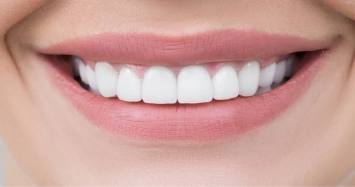
A patient rarely walks into a dental office with just one complaint about their smile. What they say out loud might be, “I want whiter teeth,” but a few minutes into the conversation, the full picture usually appears. The teeth are also slightly crowded. One front tooth sits a bit shorter than the other. There is an old bonding repair that no longer matches. The gumline may be uneven, and the person has learned exactly how to smile around all of it.
That is where Cosmetic Dentistry becomes especially valuable. The best cosmetic work is not about chasing a single feature in isolation. It is about seeing how color, shape, alignment, proportion, and gum display interact, then choosing treatments that improve several concerns together. Often, one well-planned sequence can make a smile look dramatically better while staying conservative, functional, and believable.
This matters because smile problems are rarely neatly separated. A chipped tooth can look worse because it is also darker than the neighboring teeth. Slight crowding can make one tooth appear more prominent than it actually is. Gum recession can expose root surfaces that look yellow even when the patient’s enamel is healthy. If you treat only one variable, the result can feel incomplete. If you treat the smile as a system, the result tends to look more natural.
Why smile concerns tend to overlap
People often assume cosmetic issues are cosmetic only, as if appearance exists apart from oral health and bite. In practice, the line is not so clean. The shape of a tooth affects how it catches light. The position of a tooth affects whether it looks long, short, narrow, or bulky. Wear from grinding can flatten edges, making teeth look older and less even, while also altering how the bite functions. Staining from coffee or red wine may be minor on its own, but when combined with worn enamel or mismatched restorations, it becomes far more noticeable.
A common example is the patient who wants veneers because their teeth “look crooked.” Sometimes the real issue is not severe misalignment but a mix of small spacing, uneven edges, and differences in tooth width. In those cases, veneers or bonding may solve several cosmetic concerns at once. In other cases, the teeth are truly crowded in a way that would require too much reduction to camouflage responsibly, so orthodontics should come first. The right answer depends on the amount of movement needed, the condition of the enamel, and the patient’s goals.
That kind of judgment is what separates thoughtful Cosmetic Dentistry from quick cosmetic salesmanship. A good plan improves appearance without creating future maintenance headaches.
The smile is a composition, not a checklist
Dentists who focus on esthetics do not evaluate a smile one tooth at a time. They look at the face, lip movement, tooth display at rest, gum symmetry, incisal edge position, shade, texture, and the way the upper and lower teeth meet. The result has to work in motion, not just in a photograph.
A person in their late twenties may show a lot of upper teeth when speaking and smiling. Someone in their sixties may show less due to normal changes in the lips and facial musculature. A treatment plan that ignores those details can produce teeth that are technically attractive but do not suit the person.
This is why one treatment can address multiple smile concerns when it is properly designed. Whitening can brighten the smile, yes, but it also changes what shade future bonding or veneers should be. Orthodontics can straighten teeth, but it can also create room to restore chipped edges more conservatively. Gum contouring can make short teeth look longer and more balanced, which sometimes reduces the amount of restorative work needed afterward.
When patients hear that a dentist wants to sequence treatments rather than do everything in one appointment, they sometimes worry it is unnecessary. More often, it is the opposite. Sequencing prevents overtreatment.
How a combined approach works in real life
A well-planned cosmetic case usually starts with diagnosis rather than treatment. Photos, digital scans, x-rays when appropriate, and a close bite analysis help reveal what is driving the appearance of the smile. From there, the dentist can combine options instead of relying on one procedure to do too much.
Consider someone with mild crowding, old composite bonding on the front teeth, and generalized yellowing. If the bonding is replaced before whitening, the color match may be off once the natural teeth lighten. If veneers are placed without addressing crowding, more enamel may need to be reshaped than necessary. But if the teeth are whitened first, followed by minor alignment with clear aligners, and then updated bonding or minimal veneers, the final result can be brighter, straighter, and more symmetrical, with less drilling and a more stable outcome.
This is one of the core strengths of Cosmetic Dentistry. It allows the dentist to stack modest improvements in a way that creates a substantial overall change. No single step has to do all the heavy lifting.
Treatments that frequently solve more than one problem
Some cosmetic procedures have a reputation for doing one thing, but in practice they often affect several aspects of a smile.
Teeth whitening is the simplest example. Most people think of it only as stain removal. Yet whitening also improves contrast across the smile, making small chips, uneven edges, and slight positional differences less distracting. It can serve as the foundation for any later restorative work, because once the natural teeth reach a stable shade, new restorations can be matched accurately.
Bonding is another versatile option. Composite resin can repair chips, close small gaps, soften pointed canines, lengthen worn edges, and improve shape discrepancies, often in a single visit. It is especially useful for younger patients or for those who want a conservative option. The trade-off is maintenance. Bonding can stain, dull, or chip over time, particularly in people who bite their nails, chew ice, or grind their teeth.
Veneers can address color, shape, slight spacing, and minor alignment concerns simultaneously. For the right patient, they are efficient and highly aesthetic. But they are not interchangeable with orthodontics. If the teeth are significantly rotated or crowded, forcing veneers to mask that problem can require more tooth reduction than many patients realize. Veneers work best when they are used to refine a smile, not to bulldoze biology.
Clear aligners are often viewed as straightening treatment only, but they do much more. By improving tooth position, aligners can reduce black triangles, create better spacing for restorations, and place worn teeth in a healthier bite relationship before cosmetic finishing. In many adults, a brief course of aligners can make later bonding or veneers smaller, cleaner, and more conservative.
Gum contouring is sometimes the missing piece. When teeth look short or uneven, the issue may not be the teeth at all. Excess gum tissue or asymmetrical gingival margins can make a healthy smile look unbalanced. A small amount of laser or surgical recontouring can improve proportions dramatically, often with less intervention than restorative treatment alone.
When one procedure is enough, and when it is not
Not every smile needs a full makeover. One of the most common mistakes in elective dentistry is treating a modest concern with a maximal solution. If a patient has healthy enamel, good tooth shape, and the main issue is external staining, whitening may be all that is needed. If one lateral incisor is slightly undersized, direct bonding may restore balance beautifully without changing the neighboring teeth.
The challenge is knowing when restraint serves the patient better than ambition.
A practical way to think about it is this: the more categories of concern involved, the more likely a combined plan will outperform a single procedure. If the person is bothered by color alone, a simple approach may work. If the concerns include color, edge wear, spacing, gum asymmetry, and old restorations, trying to solve everything with one treatment usually leads to compromises.
Here are some signs that a smile may benefit from a coordinated cosmetic plan rather than a single isolated procedure:
- The patient describes more than one visual problem, such as staining plus crowding plus chipped edges.
- Existing fillings or bonding are visible in the front and no longer match the surrounding enamel.
- Tooth wear or grinding has changed both the appearance and function of the bite.
- The gums appear uneven, making otherwise healthy teeth look mismatched in size.
- Previous cosmetic work improved one area but left the smile looking inconsistent overall.
Those situations do not automatically mean veneers or a major reconstruction. They simply suggest that the smile should be evaluated as a whole.
The role of conservative planning
There is a phrase dentists use often, and for good reason: the most conservative treatment that meets the goal is usually the best starting point.
This matters in cosmetic care because enamel is valuable. Once removed, it does not grow back. For that reason, many modern cosmetic plans begin with treatments that preserve as much natural tooth structure as possible. Whitening before restorations, orthodontic alignment before veneers, and mock-ups before irreversible procedures all help reduce guesswork.
A patient in her forties once came in asking for eight upper veneers because she disliked the way her front teeth overlapped slightly in photos. She assumed veneers were the standard answer because that was what she saw online. After records and discussion, it turned out she had healthy enamel, minimal fillings, and only a few millimeters of crowding. Six months of aligner treatment, followed by whitening and small edge bonding on two teeth, gave her the look she wanted with a fraction of the intervention. The smile looked natural because her actual teeth, texture, and translucency remained largely intact.
That kind of result often ages better than a more aggressive shortcut.
What patients often misunderstand about “instant” smile fixes
The phrase “instant smile makeover” sounds appealing, but it can obscure the trade-offs involved. Fast does not always mean wrong, but it should prompt questions.
If teeth are heavily discolored from internal causes, such as trauma or certain medications, whitening may have limited effect, and veneers or crowns may indeed be appropriate. If a front tooth has large failing fillings and repeated fractures, a more comprehensive restoration can be justified. But when the issue is mostly positional, using porcelain to fake orthodontic movement can create bulk, dark margins over time, or sensitivity if too much enamel is removed.
Another misunderstanding is that cosmetic treatment is purely visual. Bite matters. A beautifully shaped front tooth will not stay beautiful for long if it is taking excessive force every time the patient chews or grinds during sleep. The best cosmetic dentists pay close attention to function, because appearance and durability are tied together.
Sequencing makes the difference
The order of treatment can determine whether the final smile looks polished or patchwork. A strong cosmetic plan usually follows a logic that protects options and reduces rework.
Whitening generally comes early, because shade influences everything that follows. Orthodontic movement often comes before bonding or veneers, because tooth position affects how much restorative material is needed. Gum contouring may happen before final restorations so the proportions can be designed accurately. Protective appliances, such as night guards, may come at the end if grinding is part of the picture.
A sensible sequence often looks like this:
- Diagnose fully with photos, exam, and bite analysis.
- Improve tooth position or gum symmetry if those issues are driving the esthetic imbalance.
- Whiten natural teeth to establish the target shade.
- Place final bonding, veneers, or other restorations once the foundation is stable.
- Protect the result with maintenance and, if needed, a night guard.
That order is not universal, but the principle is. Foundation first, finishing later.
The value of mock-ups and trial smiles
One of the best advances in Cosmetic Dentistry is not a material or machine but a planning habit: letting patients preview changes before committing. This may involve a digital simulation, a wax-up, or a temporary mock-up placed over the teeth. None of these tools is perfect, but they help answer an important question: does the proposed smile actually suit the person’s face and preferences?
This is particularly helpful when several concerns are being addressed at once. A patient may ask for very white, very uniform teeth, then realize during the mock-up that the look feels too stark or too square. Others discover they want a little more length to the front teeth than they initially imagined. Small adjustments at the planning stage prevent expensive regret later.
Mock-ups also reveal practical issues. A change that looks good in still photos may affect speech if the edges are too long or bulky. The “f” and “v” sounds are especially telling when testing front tooth length and position.
Maintenance matters more than marketing
Cosmetic treatment is not a one-time event that stays perfect forever. Different materials age differently, and patients deserve straightforward guidance on that point.
Whitened teeth can pick up new stains over time, especially in people who drink coffee, tea, or red wine regularly. Bonding may require polishing or repair every few years depending on habits and bite forces. Porcelain veneers are durable, but Cosmetic Dentistry they are not indestructible, and gums can change around them just as they do around natural teeth.
That does not make these treatments poor choices. It simply means expectations should be realistic. Good cosmetic work is part treatment, part maintenance plan.
A patient who clenches at night and receives veneers without a night guard is taking an unnecessary risk. Someone who wants bonding to close small gaps but also bites pens all day should know chipping is more likely. These are not reasons to avoid treatment. They are reasons to tailor it.
Choosing the right dentist for complex smile concerns
Not every dentist approaches aesthetics the same way. Some are excellent at single-tooth repairs but do not spend much time on comprehensive smile design. Others are highly skilled with porcelain but may be quicker to restore than to align. Neither is automatically wrong, but if you are trying to address multiple concerns at once, the planning philosophy matters.
A strong cosmetic consultation should include more than a shade discussion. It should explore what bothers you, what you want to preserve, how your bite functions, and what level of maintenance you are willing to accept. You should hear not only what can be done, but also what should probably not be done.
That restraint is often a sign of experience.
The most satisfying cosmetic results are rarely the flashiest. They are the ones that solve several problems elegantly, respect the biology of the teeth and gums, and still look believable years later. When Cosmetic Dentistry is practiced well, it does not just make teeth whiter or straighter. It coordinates color, contour, position, and proportion so the smile feels cohesive.
That is why a thoughtful cosmetic plan can address multiple smile concerns at once. Not by piling on procedures, but by understanding how each part of the smile affects the others, then choosing a sequence that improves the whole picture.
Toothworks of Bakersfield, Dentist and Orthodontist
1030 H St #1, Bakersfield, CA 93304, United States
+1 661-323-9421
FAQ About Cosmetic Dentistry
Is bonding better than veneers?
Neither option is best for everyone. Composite bonding can address small chips, gaps, or shape concerns and is generally easier to repair. Porcelain veneers may offer greater resistance to staining and wear, but often require removal of some enamel. A dentist should assess your oral health, bite, goals, and budget before recommending treatment.
How long will dental bonding last?
Bonding commonly lasts about three to ten years before it needs repair or replacement, though this varies with the location and amount of bonding, your bite, and daily habits. Regular dental visits, good oral hygiene, and avoiding chewing hard objects can help protect it. Ask your dentist what lifespan is realistic for your particular treatment.
What are the risks of teeth whitening?
Whitening can cause temporary tooth sensitivity and gum irritation. Overuse or incorrect use may damage teeth or gums, and whitening does not change the color of existing crowns, veneers, or fillings. Have a dentist assess your teeth and gums, and follow the recommended product directions and treatment schedule.